Life as Rehearsal for the Poem and Poetics as Cosmology 2026 Workshops
Life as Rehearsal for the Poem (LARFP)
- Sundays 3-5 PM PDT
- March 29, April 5, 12, 19, and 26, 2026
Poetics as Cosmology (PAC)
- Thursdays 3-5 PM PDT
- March 26, April 2, 9, 16, and 23, 2026
Life as Rehearsal for the Poem / Poetics as Cosmology SPRING 2026 Workshops
History of Cascadia Poetry. A five week online (Zoom) workshop best suited for continuing participants and more experienced poets (open to open form) in workshops facilitated by Cascadia Poetics Lab and Poetry Postcard Fest Co-Founder Paul E Nelson. Participate in reading and discussion of foundational essays, interviews, listening and other assignments, as well as spontaneous poetry composition exercises. In Spring 2026, we’ll explore a short history of Cascadian poetry, touching on:
- Theodore Roethke
- Fred Wah
- Daphne Marlatt
- George Bowering
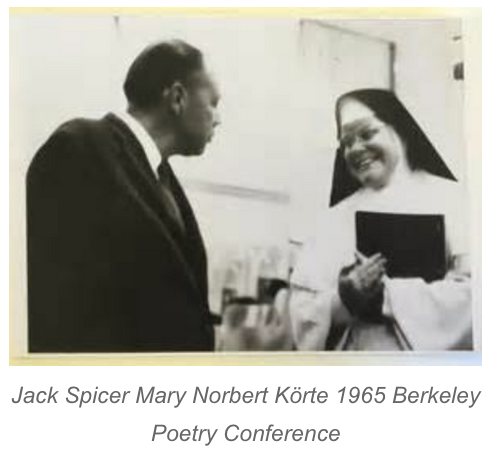
- Mary Norbert Körte
- John Olson
- Phyllis Webb
- Stephen Collis
- Sharon Thesen
- Barry McKinnon
- Cedar Sigo
- George Stanley
- Robin Blaser
- Gary Snyder & 15. Gary Copeland Lilley, among others…
and related texts and assignments. How can one’s poetics be a cosmology and how can one maintain some experience of the Poetry Postcard Fest, & allow one’s life as a creative participant in the world to rise in one’s personal hierarchy of duties/activities? How is the projective poem an antidote to Silicon Valley attention fracking? An alternative to A.I. Slop? Will you let the machines do your thinking?
$125 suggested donation for each five week session per person, scholarships are available. Canadians in need can pay $125 CAD.
Life as Rehearsal for the Poem (LARFP)
- Sundays, 3-5PM, PACIFIC
- March 29, April 5, 12, 19, and 26, 2026
Poetics as Cosmology (PAC)
- Thursdays, 3-5PM, PACIFIC
- March 26, April 2, 9, 16, and 23
Also, these essays on Poetics are helpful for beginning and advanced students. The courses are essentially the same. These workshops are conducted online.
WHY LARFP? See: https://paulenelson.com/life-as-rehearsal-for-the-poem/
A.I. says:
- Organic Process: The workshops emphasize that the “poem” is not a pre-meditated, academic construct, but rather a “continuation of life” or a “tendril” growing from direct experience.
- Improvisation: It suggests that because life is spontaneous, the poem should reflect that spontaneity, acting as a “recording” of one’s consciousness in action.
- “Life-force” Over Perfection: The approach prioritizes the “vitality” or “energy” of a lived moment over the need to maintain a “perfect appearance” in a rehearsal for a future life.
- Connection to “Poetics as Cosmology”: The workshop encourages participants to treat their personal, daily lives as a form of sacred, artistic practice, aligning with the idea that the “poem” is a “summary of your life to that point”.
Course Materials Week 1
(Thursday, March 26, and Sunday, March 29, 2026)
READ: A Way Forward for Cascadian Poetry
READ: WCW The Poem as a Field of Action
LISTEN (or WATCH): Interview with Roethke scholar Bill Barillas
READ: The North American Sequence
EXTRA CREDIT: Bill Barillas Intro to Field Guide to the Poetry of Theodore Roethke
ADDITIONAL MATERIALS: Watch Jean Walkinshaw Profile
WATCH: In a Dark Time (on Theodore Roethke)
WATCH: Three NW Artists
Course Materials Week 2
(Thursday, April 2, and Sunday, April 5, 2026)
Read: The Prosody of Open Form
Watch: The Line Has Shattered
Listen: Lorin Medley Interview (Video) (Audio)
Read: Cascadia Poetry Interview by Crystal Curry (2012)
Read: Limestone Lakes Utaniki (You have to scroll down once on the pdf)
Watch: CPF9 video of Daphne Marlatt & Fred Wah (audio is so-so)
Additional Materials: Fred Wah Interview (Note the parts on Utaniki)
Write: Utaniki. Fred Wah noted the Haibun form and here is a poetic journal that comes from you but could expand beyond your personal mythology if you drill down to the minute particulars of your present dharma position. Ideally this is an exercise done over several days or more. Maybe you continue to add to this during the course of this workshop. Do click on hyperlinks above for more guidance. You do not have to write a haiku as part of your Utaniki. One line could work.
Course Materials Week 3
(Thursday, April 9, and Sunday, April 12, 2026)
Read: George Bowering on Happiness
Read: George Bowering Creative Writing
Read: George Bowering on Kerrisdale Elegies
Read: George Bowering Kerrisdale Elegy 5
Listen: July 2012 Interview with George Bowering
Write: How does one write from another piece of writing? First, if you find energy in it and it activates this heightened sense of language, it can work. We have already shared the grafting technique, as well as the cover poem. (Kerrisdale Elegies are a “cover poem” you may have noticed.) If either of these are working for you, try them again with Kerrisdale Elegy 5. Maybe instead of a sport from which you derive your content (as Bowering does with baseball and Rilke from acrobats (or lovers)), try a cover poem on this section of Bowering’s book about an activity like grocery shopping, kayaking, graffiti, cooking or birding. If you like, try taking a phrase or two from the 5th Kerrisdale Elegy that inspire you, write those phrases one word at a time down the left margin and create a Phrase Acrostic. Erasures and Mesostics can be fun as well. You can get very creative if you do a version of Jerome Rothenberg’s Lorca Variations to Bowering (or anyone whose work you admire.) In addition to that last link, there is this excerpt of my interview with Rothenberg that gives more specifics on how he created his variations. This is a very involved process so get on it if you want to have something ready for your Week Three check-in.
Read: The First Book of Mary Norbert Korte: A Research
Listen: Mary Norbert Körte Interview – Iris Cushing
Read: Mary Norbert Körte from Cascadian Zen Volume I
Write: Getting Intertextual with the Beat (ex-) Nun. Iris Cushing writes: “Nineteen of the thirty-four poems in Hymn to the Gentle Sun, for example, are either dedicated to another poet, or have a line written by someone else as the title. This pattern is an indication of the intense intertextuality that became one of Korte’s signatures—a mode of writing in continuous conversation with peers…” Of course grafting is classic intertextuality. But maybe consider an epistle poem.Here is a good article on that form. Maybe your epistle to Sister Mary it has questions that you would ask her?
EXTRA CREDIT: As discussed in Poetics as Cosmology, bp nichol Poem Pome.
As discussed in Poetics as Cosmology: The Four Horsemen.
Listen to March 2026 Virgo Moon Eclipse Reset Playlist
Course Materials Week 4
(Thursday, April 16, and Sunday, April 19, 2026)
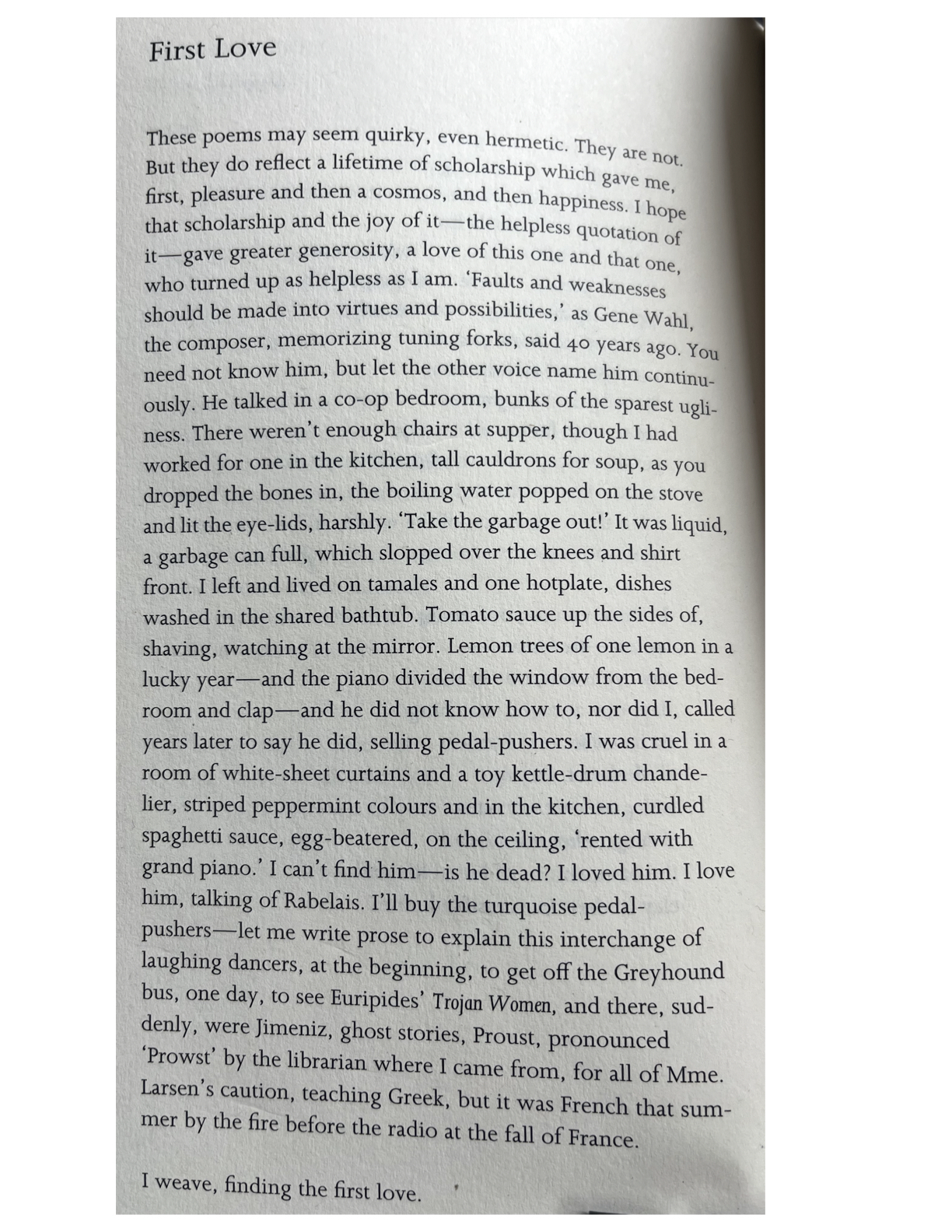
Read: Robin Blaser – First Love
Read: Robin Blaser’s Last Interview
Listen: Miriam Nichols on Robin Blaser on poetry as Noetic. (The whole interview is here.)
Listen: 2013 interview segment, David Abel on Paul Blackburn, BC poets & Portland culture. (The whole interview is here.)
Read: what would you do? Robin Blaser
Write: What is more indicative of one’s own personal mythology more than sex? Who we choose to have such relations with, the beauty (or carnage) that comes from that and the memories or wounds that are formed? Feel free to graft from the poem by using a line from it to start your own poem, or write a cover of the poem, or write a poem about a particular occasion (or slew of them). As always, start with a memory or, as Michael would say: “a piece of consciousness” that has energy for you, consider using the warm, elegiac tone of Blaser and see if you can keep it short and pithy. If this topic is too charged for you, remember you are not required to share this or any other writing in the workshop.
More to come…
READ: Jamie Reid Dead at 74
READ: Denise Levertov – With Eyes at the Back of Our Heads
READ: Denise Levertov – A Clearing
READ: Denise Levertov – A Cloak
READ: Denise Levertov – Some Notes on Organic Form
READ: Denise Levertov – On the Function of the Line
READ: Some Fake Poems by Jamie Reid
WRITE: Read Fake Poem 10 again and Fake Poem 22. Fake Poem 10 is a Death Poem and has an elegiac poem. Your task, should you accept it, is to write an elegy, or a Death Poem. In Japanese Jisei and there is a Japanese Death Poem handout here. You could even simply write your epitaph. (“I Told You My Feet Were Killing Me” is already taken.) Fake Poem 22 is a list poem about grace. Write a cover.
Extra Credit:
Watch/Listen: Paul reads Charles Olson’s The Kingfishers (w/ French by Bhakti Marie Watts)
Course Materials Week 5
(Thursday, April 23, and Sunday, April 26, 2026)
Read: Robin Blaser on the Serial Poem (from Pacific Nation)
Serial Poem. Robin Blaser and other poets from B.C. understand the freedom and openness that the serial poem enables. What would your subject be if you wrote a serial poem? What is the connection to your own personal mythology? Could you commit to doing a serial poem during, say, a 56 day period like the Poetry Postcard Fest? Think of a subject that, ideally, involves research, local history and your own personal mythology.
Read: Phyllis Webb from Cascadian Zen
Project: Have you ever visited Wilson’s Bowl? I am fascinated by the very existence of the bowl and the notion that it is a place so connected to poetry. Could one of your poems end up out in the world somewhere, ideally not easily accessed? Is there a poet who you believe ought to be honored in the way Wilson Duff is honored by Wilson’s Bowl? Questions to ponder as the material from Phyllis sinks in.
Write: Found Duende, Erasing Duende, Duende Phrase Acrostic
This exercise was written a year ago, but is eternal. I have talked these past few weeks about the need for surprise mind, the need to go further down your own throat, the opportunity to connect with entities that can be seen as outside yourself (outside your local mind) and Lorca said it so well nearly 100 years ago in an essay written from the depths of eternity. The link is in the handout. Please feel free to be as weird, illogical and free as you can.
Read: Sam Hamill on Epistolary Poetry
Listen: Sam Hamill at Doe Bay
Listen: Sam on the Sequential (Serial) Poem
Listen: Sam Hamill Nov 2010 Interview
Read: Some of The Letters of Sam Hamill
There are a lot, so read as many as you like to get a sense of where Sam was coming from.
What is Civilization?
“A whole civilization will die tonight, never to be brought back again.”
President Donald J. Trump
Truth Social
7-April-2026
2. The civilian population as such, as well as individual civilians, shall not be the object of attack. Acts or threats of violence the primary purpose of which is to spread terror among the civilian population are prohibited.
Article 51
Geneva Conventions
of 12-August-1949

These past five weeks we have investigated Cascadian poetry. From its birth with Theodore Roethke’s North American Sequence (written late 50s or early 60s) to the TISH movement in Vancouver starting around 1963, with poets like Daphne Marlatt, Fred Wah, George Bowering, Jamie Reid and others, to Robin Blaser, Denise Levertov, Phyllis Webb and Sam Hamill.
After watching the video above, could you write a letter poem to Arnab Goswami about what you believe are some of the redeeming aspects of Cascadian Civilization, were there to be such a thing. Imagine there is. Use the epistle form as described (or practiced) by Sam and try to avoid the unnecessary confrontational tone of the demagogue. Go high. If this does not give you something to work with, writing an epistle poem to anyone will do. Sam’s warm tone is a good model.
In the Fall this workshop will resume under the banner Poetry as Neuro-Resilience. There will be ten openings in each edition (Thursday and Sunday) and it will be a pay-what you–can offering. If you are broke, pay what you can and you’ll be welcome. It will require regular journaling (it’s best to write daily) as a way to release the junk of your life so you can sink in to the serial or multi-decade research project. I will offer private sessions to participants for a fee to help them in your quest. Content for the fall will be Cascadian poets again, though we’ll have a different way of grouping them.
Thanks for your engaged participation in this work.
Paul
Bonus Week Six Materials, Thursday, April 30, 2026, 3-5pm PST
READ: Deborah Poe Winter in America (Still Submission
WATCH: Deborah Poe Interview (April 27, 2026)
As part of your registration, you become a member of Cascadia Poetics LAB. Membership is free, carries no cost or obligations, and is recorded with your registration. See our Membership Policy for details.